Article
WHAT IS TO BE DONE? What’s next for downtown management?
December 15, 2020
By Andrew M Manshel
Walking along 42nd Street towards Bryant Park right after the November election in the U.S. I was shocked to see the windows boarded up on two jewelry stores facing Bryant Park. The essence of the revitalization of the park was creating the perception of safety for its potential users. This was definitely not that. Boarding up windows is not what George Kelling and Katherine Coles had in mind when they wrote “Fixing Broken Windows.1” The revitalization of Bryant Park was led by a business improvement district (BID),which was associated with two other BIDs focused on the areas around the transit hubs of Grand Central Terminal (Grand Central Partnership) and New York’s Penn Station (34th Street Partnership).
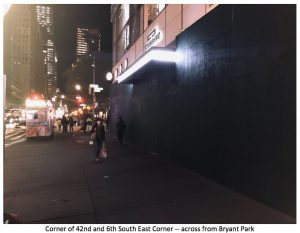 The issues around public disorder in connection with the election were both overstated and transitory. But the underlying concerns about safety in public spaces reflected in the impulse of store owners to protect their merchandise caused by the pandemic are real and will be lasting. In order to attract people back to commercial corridors and downtown public spaces, they will need to be convinced that the probability of contracting the COVID-19 virus by visiting downtown is small or negligible. Once again, as in the early 90’s, Business Improvement Districts will need to create the perception of safety and figure out how to communicate it to the public – this time, however, the issue isn’t the absence of crime, but protection from infection.
A Call for Papers. The ADRR welcomes article manuscripts on the general topic raised in Andy Manshel’s article: how downtown management can adapt to the new challenges it is facing. What are the characteristics and scopes of these challenges? What are solutions paths that might be followed. For questions and submissions contact David Milder at amdtnrevrev@gmail.com.